
Published: 19/11/2025
IntroductionIn London real estate, postcodes determine price performance, demand patterns, supply constraints and long-term appreciation. With the 2025 market entering a stabilisation phase — lower inflation, improving sentiment, strong international buyer activity, and major regeneration schemes completing — the next three years will be defined by postcode-level performance, not broad London averages.
This detailed guide highlights the top postcodes expected to deliver robust capital growth between 2025 and 2028, based on transport upgrades, regeneration impact, demand-supply imbalance, and lifestyle desirability.
What Drives Capital Growth in London
To identify winning postcodes, it’s important to understand the core growth drivers:
1. Transport & Connectivity
Areas upgraded by the Elizabeth Line, Thameslink, Northern Line extension or proximity to key transport hubs attract a surge of buyer demand. Fast, reliable transport increases both rental and resale value.
2. Regeneration Momentum
Large-scale regeneration — new homes, improved public realm, commercial zones, retail, parks — generally increases desirability and long-term equity growth. Buyers pay a premium for future-ready neighbourhoods.
3. Supply Scarcity
London areas with strict planning restrictions, heritage buildings or limited land often appreciate faster. Scarcity naturally increases value.
4. Global Investor Demand
Many postcodes benefit from long-term UHNW interest, especially Prime Central London (PCL). These areas hold value even in downturns and bounce back quickest in recoveries.
5. Affordability vs Premium Balance
Mid-priced yet well-connected areas often outperform because they offer stronger upside compared to already-mature luxury zones.
Top London Postcodes for Capital Growth (2025–2028)
Below are the postcode clusters with the strongest appreciation potential over the coming years.
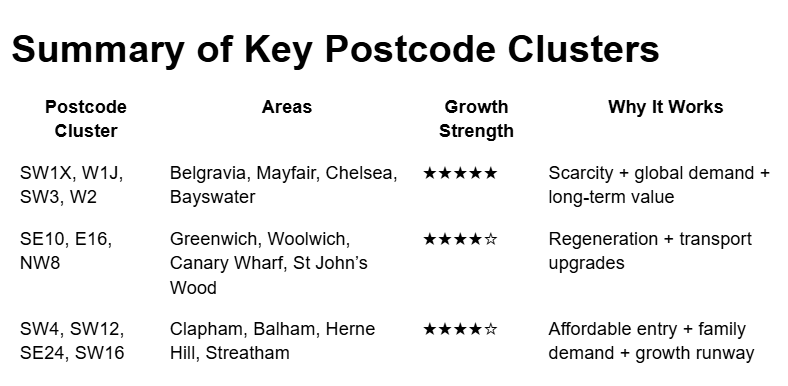
1. Ultra-Prime Central London: SW1X, W1J, SW3, W2
Areas: Belgravia, Mayfair, Chelsea, Bayswater
Why these postcodes stand out:
These neighbourhoods combine extraordinary scarcity, heavy global demand, and extremely limited new-build supply. In the last recovery cycles, PCL outperformed broader London once stability returned.
2025–2028 is expected to mirror this trend as international buyers return strongly.
Growth Factors:
- Trophy assets and heritage architecture
- Consistent demand from global HNWIs
- Regulated supply and strict planning rules
- Strong long-run capital appreciation history
Long-term, steady capital appreciation with high resilience during market volatility.
Who this is ideal for:
Wealth preservation investors, UHNW buyers, luxury investment portfolios.
2. Emerging Growth Corridors: SE10, E16, NW8
Areas: Greenwich Peninsula, Woolwich, Canary Wharf, St John’s Wood
These postcodes represent the future-forward segments of the London market. Regeneration, mixed-use development, better connectivity and new lifestyle infrastructure have transformed these into growth engines.
Why These Postcodes Are Poised for Strong Growth
- Major regeneration in SE10 and E16
- Elizabeth Line boosting access to Canary Wharf & Woolwich
- High rental demand due to business zones, universities & lifestyle amenities
- Family-centric premium homes in NW8 with international buyer appeal
5–8% annualised capital growth potential across the next 3–5 years, with especially strong momentum in E16 and SE10 due to new residential demand.
Best For
Investors seeking a balance between growth potential, rental demand, and future desirability.
3. Value-Entry Growth Zones: SW4, SW12, SE24, SW16
Areas: Clapham, Balham, Herne Hill, Streatham Hill
These postcodes offer excellent connectivity, strong communities, vibrant high streets and access to green spaces — all high-priority buyer factors.
Why They Will Grow
- Still affordable relative to other Zone 2/3 locations
- Consistently high demand from young professionals and families
- Limited supply of larger Victorian and Edwardian homes
- Good rental yields plus long-term appreciation
4–6% annual growth potential with strong liquidity and easy resale conditions.
Best For
Mid-budget investors looking for safe, sustainable capital appreciation with good tenant demand.
How to Choose the Right Postcode for Your Investment
When selecting a postcode for long-term capital growth, consider:
1. Your Budget
PCL suits high-budget wealth investors, while SW4–SW16 offers mid-range access.
2. Your Investment Horizon
Capital growth in London is strongest for investors holding 3–7 years minimum.
3. Your Risk Profile
Regeneration zones offer higher upside but may carry timing risks. Established zones offer stability and steady growth.
4. Transport & Planning Pipeline
Always check what infrastructure or urban developments are planned for the next 5–10 years.
5. Resale Demand
Choose areas with strong buyer depth — families, professionals, or global UHNW buyers.
Conclusion
London’s property market remains one of the world’s strongest long-term capital growth engines, but postcode selection is everything. Between 2025 and 2028, areas with scarcity, regeneration, transport improvements and international demand will outperform the wider market.
Whether you are a luxury buyer targeting Prime Central London, or an investor looking for strong appreciation in dynamic emerging corridors, the right postcode can significantly increase your long-term returns.